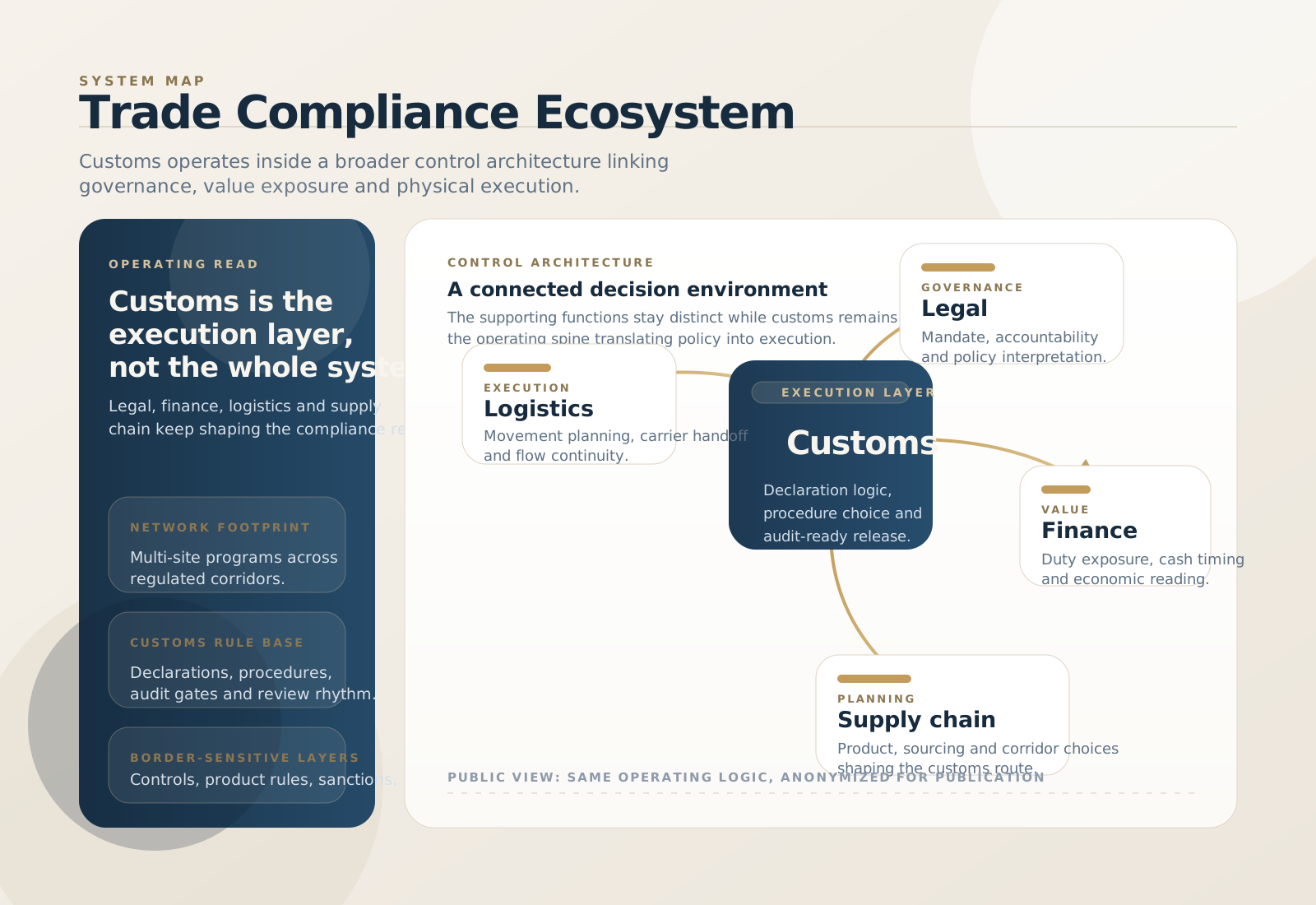
Whole-system reading
The diagram makes it clearer that classification, screening, valuation, documents and release are not separate themes when the file needs to stay defensible.
For CIESSE governance does not replace operations: it makes them more reliable. Classification, origin, valuation, export controls, screening, document governance and special procedures are treated as practical levers supporting the shipment and the client.
Classification, origin, valuation and screening are treated here as file-integrity levers rather than theory detached from operations.
Workstreams that directly influence declaration accuracy and the defensibility of the file if questioned later.
For sensitive flows, dual-use items or exposed counterparties, screening cannot be treated as a decorative add-on. The same is true for REACH, RoHS, CE/UKCA, CBAM, SPS and other product/regulatory layers that genuinely change the file.
Where the mandate requires it, the customs perimeter is aligned with VAT, fiscal representation or evidence that must remain coherent with finance and accounting.
This visual is rebuilt from the attached ecosystem slide and keeps the useful point: customs compliance only becomes durable when legal, customs, finance, logistics and supply chain are read inside one coherent perimeter.
For CIESSE this matters because the technical layer does not stay theoretical: it enters the file, the document set, the instructions and the way the case holds up under later requests.
The diagram makes it clearer that classification, screening, valuation, documents and release are not separate themes when the file needs to stay defensible.

Classification, origin, valuation and screening are presented as part of the case infrastructure, not as theory hanging off the side of the file.

The compliance layer remains useful only if it improves the solidity of the file, the release logic and the relationship with client, finance and internal compliance.
When classification, origin, valuation, screening or non-duty profiles are treated as decorative add-ons, the problem still reaches the border, only later, faster and more expensively. That is why CIESSE integrates those themes into the case reading without turning itself into an abstract brochure.
The point is not to promise a theoretical service on everything. It is to recognize when valuation, origin, export controls or document-governance issues are already affecting the file and need to be handled more structurally before they become disputes, blocks or recurring cost.
The page should make it clear that compliance matters when it improves consistency between the file, the documents, the declaration and the link back to finance or the client.
| Theme | Operating risk | Desired effect |
|---|---|---|
| HS, origin, valuation | Repeated errors, inconsistent instructions and declarations that do not hold against the actual file. | Stronger technical coherence between the file, the declaration and later requests. |
| Screening and export controls | Counterparties, ownership or sensitive profiles treated too superficially or too late. | Clearer escalation and stronger traceability of release or stop decisions. |
| Product / regulatory trade compliance | REACH, RoHS, CE/UKCA, CBAM, SPS or other product layers remain outside the file until they generate stops or inconsistencies. | The case becomes more readable for the client, compliance and operations, avoiding product-related issues surfacing too late at the border or in the commercial relationship. |
| Document governance | Fragmented files, misaligned attachments and loss of case memory across multiple actors. | More defensible files, less rework and better alignment with client, finance and compliance. |
CIESSE technical depth should not stay implicit. The site makes clear that the company can read HS, origin, FTAs, valuation, import VAT, screening and export controls at the point where those themes affect the file, the declaration and the client relationship.
When a case requires a stronger cross-border advisory layer, the partnership with CSA Nexus reinforces the coverage. But the page also makes clear that CIESSE can offer technical-operational and compliance-aware support autonomously within its own commercial perimeter, inside a capability set that is largely shared with CSA Nexus.
| Theme | Execution point | Why it matters |
|---|---|---|
| Import VAT and finance alignment | The file should leave readable traces for accounting, deferment, PVA-like logic and later review. | It reduces rework and contradictions between the declaration, the file and finance records. |
| ENS / ICS2 and pre-arrival security | Goods descriptions, party data and documentary ownership must be strong enough to withstand a security-filing review. | It prevents the problem surfacing on the carrier or security side before the declaration becomes decisive. |
| Product regulatory and dangerous / controlled goods | REACH, CLP, GPSR, waste shipments, SPS, CITES or other layers should change the file and the operating instructions, not remain theory. | It strengthens the file where the issue is not only duty-related but also one of product status, permit chain or evidence. |
On the CIESSE side, this should not be framed as abstract tax theory. It becomes relevant when a year-end adjustment, royalty or embedded support changes the value of the file and forces a rereading of the dossier, the declaration and the finance link.
IFRS or IAS 12 enter only in a reflected and practical way: when the file must leave enough traceability to support reconciliation, internal disclosure or a cleaner explanation to finance and management.